Stay Updated with Agro Cultures News



Interdum nullam est, aliquam consequat, neque sit ipsum mi dapibus quis taciti. Ullamcorper justo, elementum pellentesque gravida quisque.




Use this buyer-facing FAQ to check leakage concerns, breathability, cast film stability, custom printing, samples, MOQ, lead time and export documents before you send Xinqi a specification request.
All FAQ items are collapsed by default. Search and category filters work instantly, and each answer ends with the exact details that help Xinqi respond faster.
Send the question directly with your product application, target GSM, width, printing need and sample deadline.
Send your questionFor diaper backsheets, sanitary pads, underpads and skin-contact hygiene materials.
Xinqi breathable film is designed for stable breathability, soft handfeel, clean appearance and reliable tensile performance. It is used for baby diapers, sanitary pads, nursing pads, underpads and disposable medical hygiene materials.
No, when the film is matched correctly to the application. Breathable PE film uses a microporous structure that allows water vapor to pass while helping block liquid water. Buyers should still confirm the required waterproof level and application condition before production.
Yes. GSM, width, whiteness, color, softness, matte feel and glossy surface can be discussed according to the application and converting process. Send the target specification or a current sample for matching.
Xinqi can support quality inspection and compliance document requests for overseas hygiene material programs. Share the target market and document checklist before sampling so the team can confirm what can be provided.
A properly selected breathable film should provide stable vapor transmission and avoid local stuffiness. The final feel depends on film GSM, laminate structure, nonwoven, adhesive amount and the product design.
Start with the final product, comfort requirement, strength requirement, waterproof target and converting method. Xinqi can review your current sample or specification and suggest a sampling route.
Large-area printing may reduce breathability. Share the artwork, print coverage and target MVTR before proofing so Xinqi can discuss a balanced printing route.
Breathability can be discussed by product zone and final use. Share where the film will be used, the expected comfort target and whether a MVTR range is required for approval.
Handfeel and noise depend on film formulation, GSM, surface treatment, lamination and the nonwoven used above it. Send your current sample or handfeel target for comparison.
Pinhole risk is controlled through material cleanliness, process stability, appearance inspection and roll release checks. If pinhole control is critical, share the inspection method and acceptable standard.
Breathable film can be reviewed for medical disposable, nursing pad and underpad programs when the buyer provides application, contact surface, performance target and document requirements.
For thickness stability, flatness, lamination readiness and defect prevention.
Cast film is produced by high-temperature extrusion through a die and then cooled on a chill roll. It is valued for even thickness, flatness, tensile performance and a clean surface without stretch marks.
Common defects include white spots, black spots, crystal points and uneven thickness. They may come from raw material moisture, impurities, die condition, screw contamination, temperature setting or cooling conditions.
Stability comes from raw material control, automatic thickness measurement, automatic die control and production parameter management. Confirm the required tolerance before first sampling.
Yes. Lamination can be reviewed according to the film, nonwoven, adhesive route, width and final application. Xinqi can discuss centered or full lamination based on product requirements.
Crystal points or white spots can be caused by material impurities, additive precipitation, excessive temperature, poor drying or unsuitable cooling. The prevention route should combine raw material drying, temperature gradient and roll temperature control.
Xinqi can review an existing film sample and target specification. A practical match request should include current GSM, width, thickness, surface, color, application and the reason you want to change supplier.
Tolerance depends on material structure, GSM, width and production route. Xinqi can review the target tolerance during sampling and confirm what can be held in stable production.
Flatness is affected by cooling, tension, winding and downstream converting. Send roll width, winding requirement and converting process so the production route can be reviewed.
Surface treatment can be discussed according to whether the film will be printed, laminated or used as a support layer. The buyer should confirm the next converting step before sampling.
Roll length, roll diameter and core size can be discussed according to the buyer equipment, packing method and container plan. Send machine limitations before quotation.
For logo printing, color proofing, ink adhesion and printed breathable film decisions.
Yes. Breathable film and cast film can support flexographic printing for logos, graphics, text, anti-counterfeit marks, full-surface printing or partial printing depending on the product and artwork.
Printing durability depends on the film surface, ink system, viscosity, drying condition and handling route. Xinqi can discuss proofing and adhesion review before mass production.
Yes. Xinqi can discuss customized logo, pattern, text, anti-counterfeit printing, full-surface printing and partial printing. Send vector artwork or high-resolution files for review.
Large-area printing can affect breathability. If MVTR is critical, share the target breathability value and print coverage before proofing.
Color should be controlled against approved references and batch conditions. To reduce misunderstanding, send Pantone, physical samples or an approved proofing target before production.
Static and dust risks should be controlled during production and handling. If your product has strict appearance requirements, tell Xinqi the visual inspection standard and target application.
Send editable vector artwork when possible, such as AI or production-ready PDF, plus color references, print size, repeat length and any brand inspection requirement.
Pantone or brand color matching can be reviewed during proofing. Provide Pantone code, approved physical sample or brand color file to reduce batch misunderstanding.
Send print repeat length, artwork size, roll direction and any converting alignment requirement. These details affect plate preparation and proofing.
Full-surface printing creates stronger visual branding but may affect breathability and cost. Partial printing is often safer when MVTR and soft touch remain important.
Printed proofing can be discussed before mass production. Buyers should send artwork, color references, expected quantity and approval deadline.
For first inquiry preparation, sample route, delivery and document needs.
Yes. Sample support can be discussed for qualified inquiries. Freight is usually handled by the buyer. Share the application and target specification before requesting samples.
The typical MOQ is 1 ton. For first projects, send the target product, width, GSM, color and print requirement so Xinqi can confirm feasibility.
The usual production lead time is about 10 to 15 days after order details are confirmed. Printing proofing, custom color and document requirements may affect the schedule.
Yes. Xinqi supports export orders, multi-spec customization and export document requests. Share the destination country, required documents and shipment route early.
Document support can be prepared according to the confirmed product, specification and shipment requirement. Ask for the document pack before order confirmation so the team can check scope and availability.
Send product application, film type, GSM, width, color, printing requirement, roll length, annual volume, destination, sample deadline and any quality or certificate requirement.
The usual route is specification review, sample or proof confirmation, quotation, order confirmation and production release. Custom printing may require extra proof approval.
Quotation is affected by film type, GSM, width, color, printing coverage, roll size, order volume, packing, document requirements and destination.
Packing can be arranged according to roll size, pallet or carton requirement and container loading plan. Confirm packing preferences before order release.
Urgent requests need early confirmation of specification, artwork, material availability and production schedule. Share the required deadline first so feasibility can be checked.
Most FAQ pages stop at definitions. This page translates each answer into the specification data needed for sampling, printing proofing or a production quotation.
Send GSM, width, target application, required handfeel and whether MVTR or waterproof data is needed.
Send sample photos, thickness target, roll width and whether the film will be laminated or printed.
Send logo file, color reference, print coverage, repeat length and expected surface feel.
Send sample deadline, MOQ plan, annual volume, destination and document requirements.
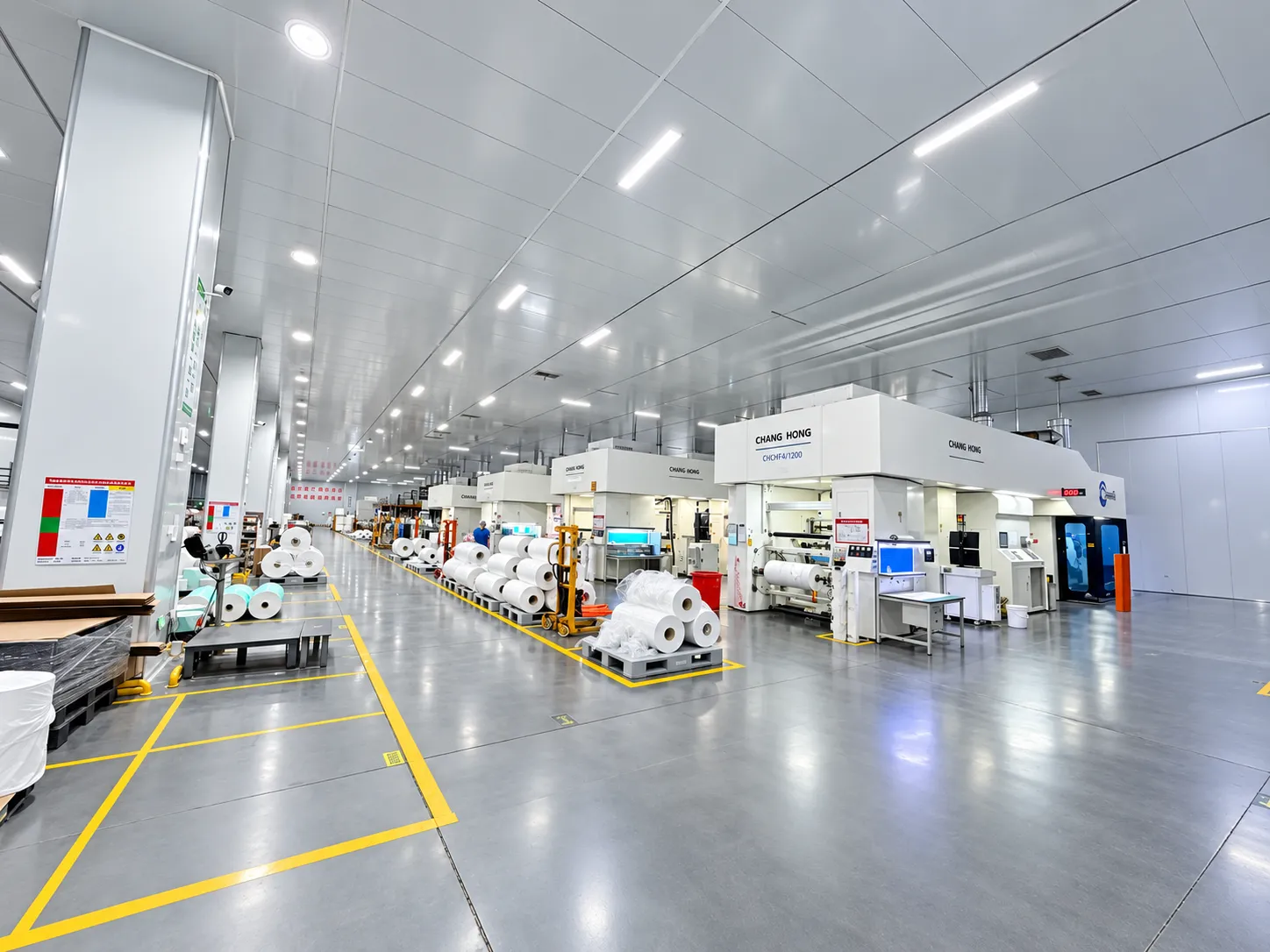
Use these process snapshots to connect a written answer with Xinqi’s actual factory capability, laboratory review and shipment release workflow.

Answers about thickness, flatness and film stability should connect to production control.

Printing answers should explain artwork, ink adhesion, color control and breathability impact.

Questions about leakage, strength or COA need a testing route, not a slogan.

Order answers should connect to roll packing, outgoing inspection and export support.
The fastest reply comes when a buyer connects the FAQ answer to application, specification, performance target and commercial route. Prepare these four fields before using the RFQ builder.
Tell Xinqi whether the film is for diapers, sanitary pads, underpads, medical disposables or another hygiene product.
Send film type, GSM, width, color, roll size, surface feel and whether printing or lamination is required.
Clarify leakage concern, MVTR, tensile strength, appearance standard, ink adhesion or COA requirement.
Add sample deadline, MOQ plan, annual volume, destination, packing preference and export document needs.
Use the selected concerns and search keyword to create a first inquiry email. This lowers back-and-forth and helps sales route the question to product, QA, printing or export support.
Different questions should not all end at the same generic contact button. The FAQ page should route buyers by their procurement stage.
For leakage, comfort, MVTR and hygiene backsheets.
For thickness stability, flatness and lamination.
For logo artwork, ink adhesion and color proofing.
For testing, COA, traceability and release checks.
For OEKO-TEX, ISO and document requests.
For samples, MOQ, lead time and export quote.
If your buyer checklist is more specific than the FAQ, send the application, GSM, width, color, printing, sample deadline and document requirements. Xinqi can route the question to product, QA, printing or export support.
Build an RFQ-ready question